

The event was organised by the D-Effect project of the European Project Centre in collaboration with our UAS’s Democracy and Diversity Initiative, initiated by Professor Dr Marianne Schmolke from the Business School.
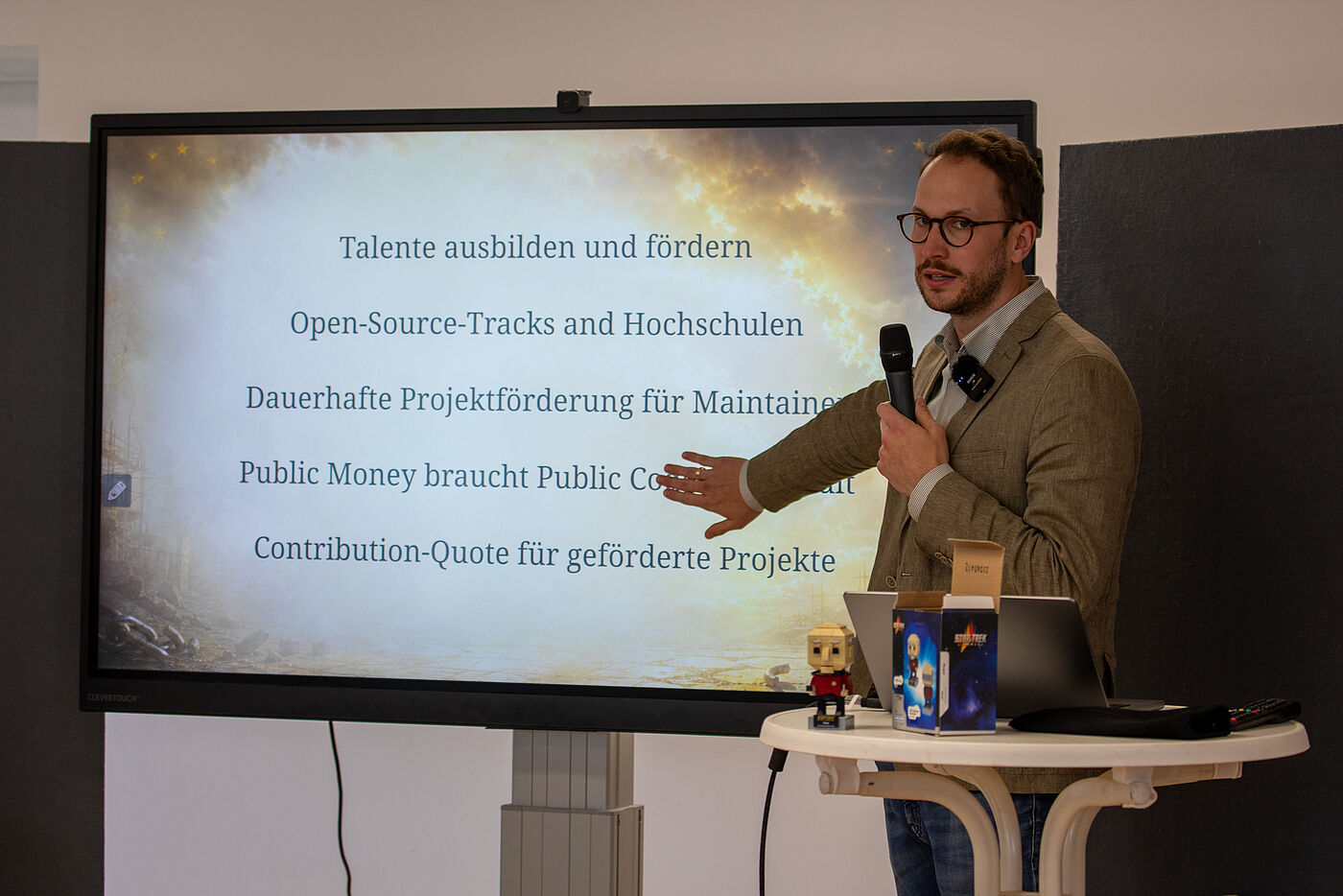
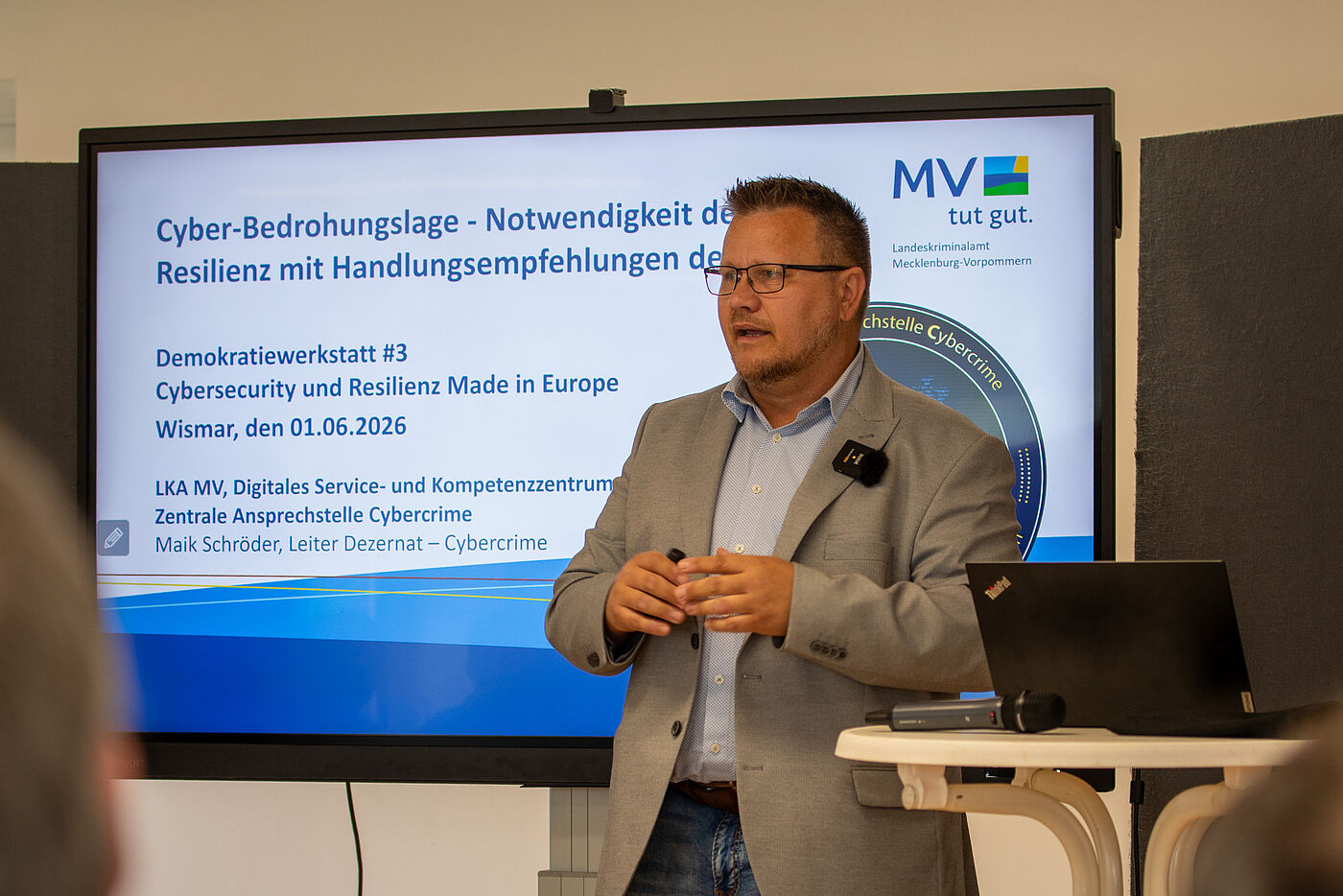
The approximately two-hour lecture event, featuring Jonas Reinhardt from Nexus Swissmlab GmbH (formerly a data scientist with the Schleswig-Holstein State Police) as well as Maik Schröder and Max Schubert (both from the Mecklenburg-Western Pomerania State Criminal Police Office (LKA)), was moderated by Stephanie Großmann.
Topics discussed included, for example, the two sides of the coin: efficient surveillance for security purposes on the one hand, and personal rights on the other. The discussion also covered the prerequisites for effective, digitally sovereign solutions, which depend not least on the level of expertise of the specialists in this sector.
According to Professor Schmolke, key insights included the importance of particular vigilance, combined, however, with a certain degree of composure regarding what cannot be changed, in order to solve problems using the resources available. Furthermore, there must be better awareness-raising and educational tools for the public.
One positive takeaway is that, in liberal, democratic systems such as ours, digital sovereignty is possible despite necessary security requirements. This requires both the commitment of individuals (e.g. in choosing the systems we work with and participating in the discourse on this topic) and of decision-makers who can initiate and drive technological developments.